
Machard Holdings Sustainable solutions | Structured success

Skills for a changing economy

Economic and technological transition is ultimately about people as much as technology.
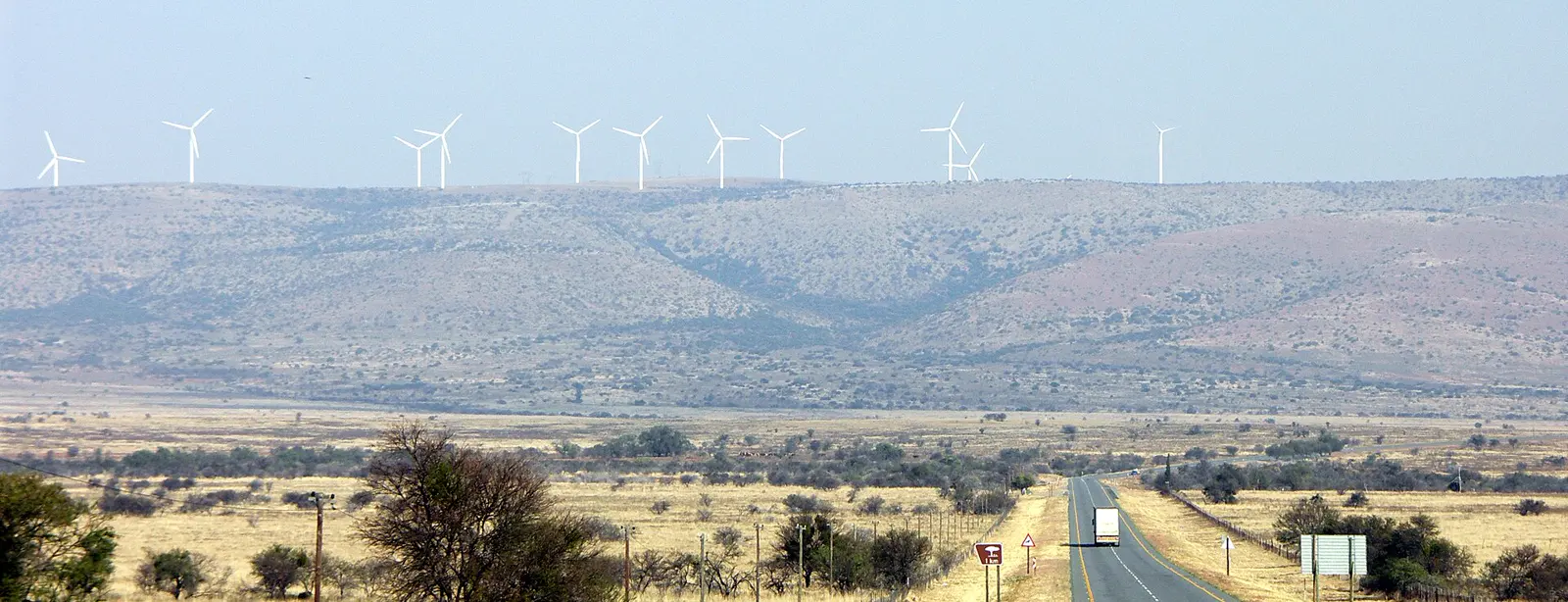
Wind turbines along a ridgeline at the Cookhouse wind farm in the Eastern Cape, with a road running through the valley below.
Plate 2 — Cookhouse wind farm, Eastern Cape NJR ZA · CC BY-SA 4.0

Machard Holdings works with clients and partners to understand how changing industries affect occupations, skills, institutions and the people who need to prepare for new opportunities.

Our work brings together industry demand, labour-market evidence, education and training systems and stakeholder knowledge so that skills responses are grounded in what is actually needed.

How economic transition becomes a skills response

This is the chain the work follows. A break at any point is where skills planning stops matching the economy.

010203 040506 07 Economictransition Industrydemand Occupations Skills andcompetencies Qualificationsand curricula Education andtraininginstitutions Employmentpathways WHAT THE ECONOMY IS ASKING FOR HOW THAT DEMAND BECOMES LEARNING WHO DELIVERS IT, AND WHERE PEOPLE ARRIVE Evidence and industry engagement Occupational and qualification design Provider readiness and pathways MACHARD HOLDINGS · SKILLS SYSTEM FRAMEWORK · REV 01
Read left to right, the chain shows how an economic transition ends in someone employable. Machard Holdings works across the whole of it, not a single stage — which is why a skills response designed only at the curriculum end so often fails to match the labour market it was meant to serve.
  1. Economic transition: the shift itself: decarbonisation, new technology, changing investment.
  2. Industry demand: what employers will actually need, in what volume and by when.
  3. Occupations: the jobs that demand resolves into, described precisely enough to plan against.
  4. Skills and competencies: what a person in that occupation must be able to do.
  5. Qualifications and curricula: how those competencies become something that can be taught and certified.
  6. Education and training institutions: the providers who must be ready, resourced and accredited to deliver.
  7. Employment pathways: how a learner moves from training into real work.

Specialist areas

Where the transition is creating demand faster than the skills system is answering it.

Just Energy Transition skills planning

Translating national and regional transition commitments into occupational and institutional plans that can be delivered.

Systems

Green hydrogen

An industry being built from a low base, where the occupations and qualifications largely do not exist yet.

Emerging industry

New Energy Vehicles and batteries

A manufacturing base that must reskill in step with the vehicles and components it is being asked to build.

Technology transition

Renewable and clean-energy skills

Construction, operations and maintenance demand across wind, solar and grid infrastructure.

Workforce demand

Regional and SDZ skills planning

Place-based planning where a transition lands unevenly, and the affected regions are specific.

Place-based delivery

Qualifications and learning pathways

The qualification, curriculum and articulation work that turns new skills demand into something a college can teach.

Learning systems
The central receiver tower of the Khi Solar One concentrated solar power plant near Upington, Northern Cape.
Plate 3 — Khi Solar One, Northern Cape Bernard DUPONT · CC BY-SA 2.0
A guyed transmission pylon carrying high-voltage lines across farmland in Gauteng, seen from below.
Plate 4 — Transmission pylon, Gauteng Graeme Williams, Media Club · CC BY-SA 2.0
Kusile power station in Mpumalanga under construction, cooling towers and boiler house against open veld.
Plate 5 — Mpumalanga, a coal region in transition JMK · CC BY-SA 4.0

A just transition only becomes meaningful when economic change is connected to people, skills, institutions and credible pathways into work.